
 Serving Hartford & Middlesex County, CT

French Drain Installation in Hartford & Middlesex County
French drain installation for yards that stay wet for days after rain. We dig the trench with our own excavators and set the pipe on a steady slope so the water drains away.
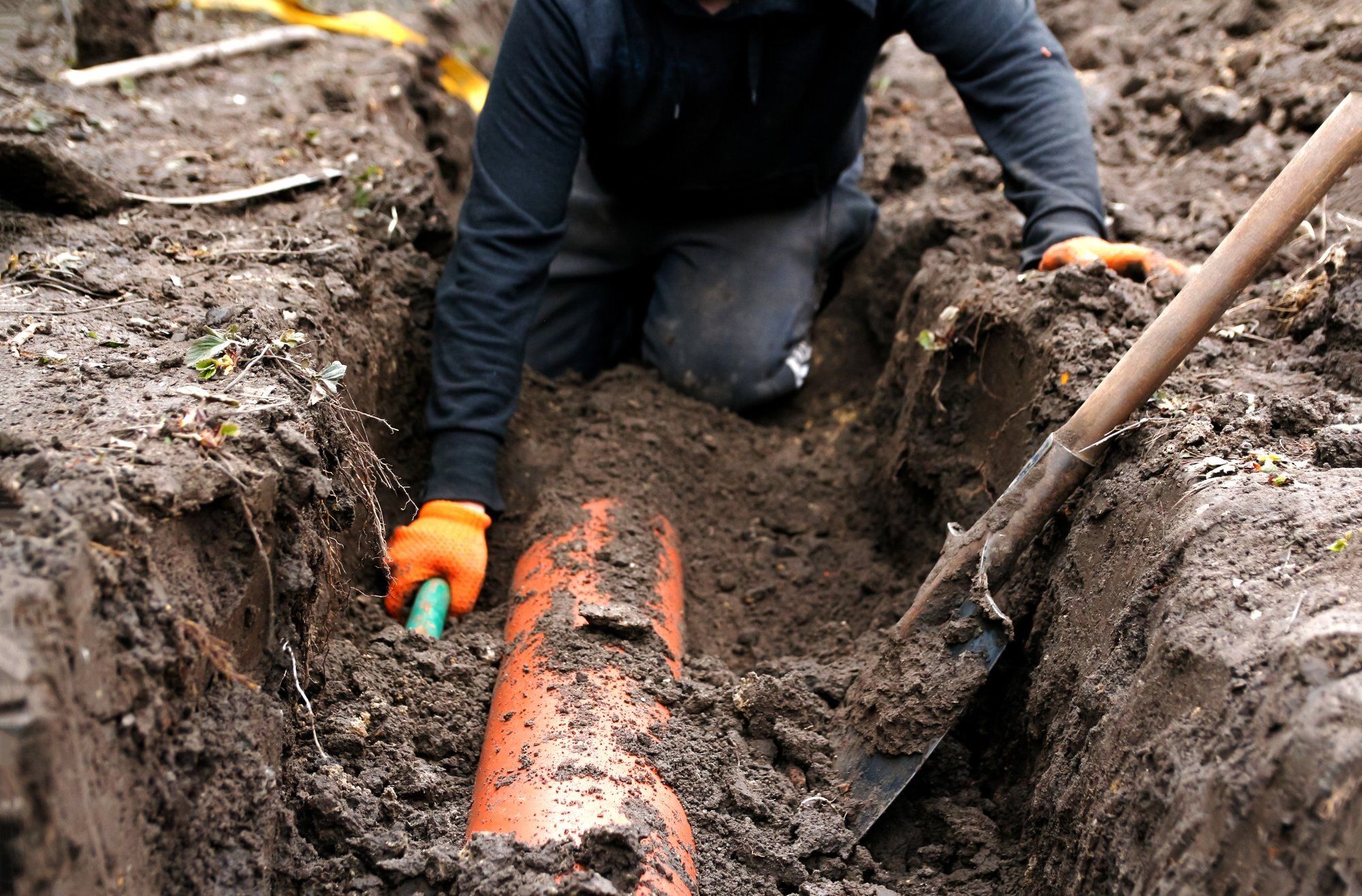
What a French Drain Does, and When It's the Right Fix
A French drain is a trench lined with filter fabric, filled with washed stone, with a perforated pipe along the bottom. Water in the ground moves into the stone, drops into the pipe and runs downhill to an outlet, away from the spot that stays wet.
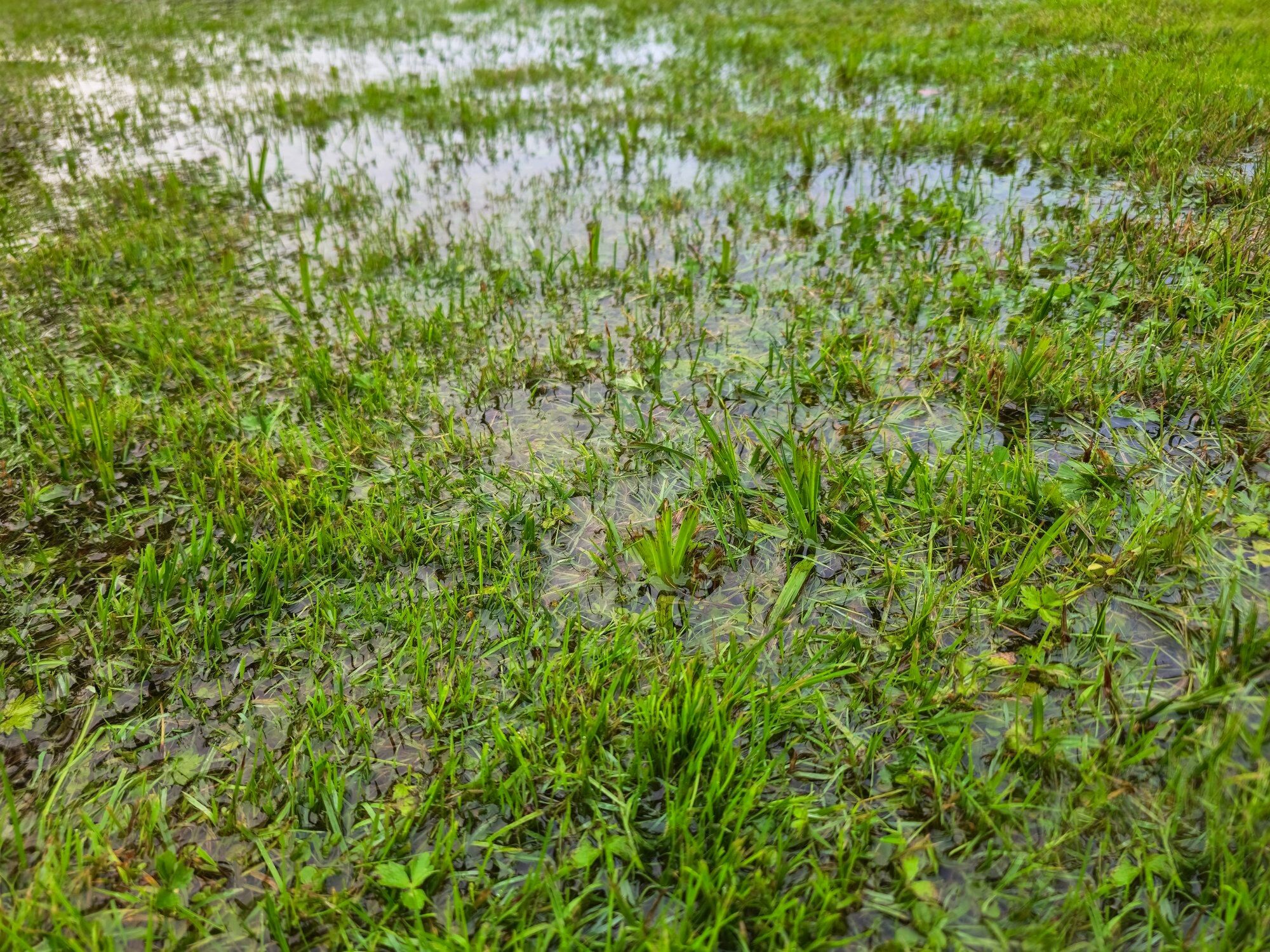
Ground that stays wet after rain
This is what a French drain is for: a strip of lawn that stays soft for days after rain, a low corner that never dries out, or water seeping toward the house from higher ground.
A yard that slopes toward the house
Regrading is usually the first step here, so the water runs away from the house. A drain on its own has a hard time keeping up with water the yard keeps sending its way.
Water coming down from a slope
A curtain drain usually works better for this. It's buried across the slope above the house and catches the water before it gets there.
Curtain drain installationWater coming off the roof
If most of the water comes off the roof, downspout extensions or a dry well may solve it for a lot less money.
- It helps to send photos of the wet area and the ground around it, and to let us know when it tends to get wet.
How We Install a French Drain
Most yard French drains take a day or two on site. The depth and the outlet vary from yard to yard, but the work always goes in this order.
Find the source and the outlet
Before anything is dug, we work out where the water is coming from and where it can go.
Get the lines marked
We file a Call Before You Dig (811) request so underground utilities are marked before the machine starts.
Dig the trench
For a yard drain, the trench is usually 18 to 24 inches deep and about a foot wide. It goes deeper where it has to catch groundwater.
Fabric, stone and pipe
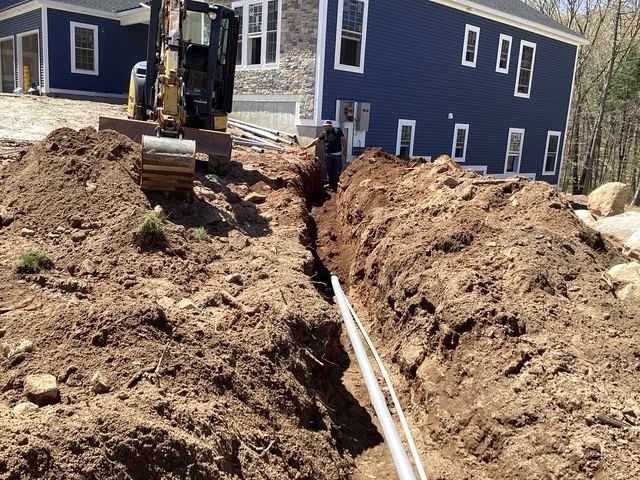
We lay non-woven filter fabric and a bed of washed stone, then 4-inch perforated pipe sloped toward the outlet at about an inch of drop every 8 feet.
Cover and finish
More stone goes over the pipe and the fabric folds over the top. Then we finish it with stone at the surface, or with soil.
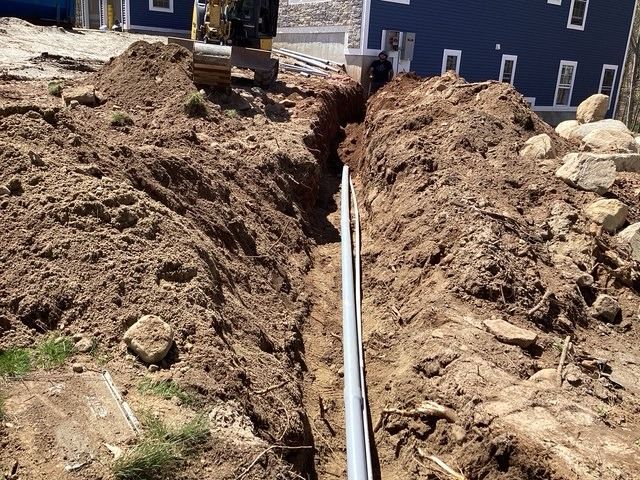
Common Problems With DIY French Drains
Plenty of people put in their own French drain. If yours has stopped working, it's often for one of the reasons below.
When we dig the trench with an excavator, it keeps an even depth and width the whole way, even through roots and rock that would stop a shovel. The dirt also goes into one pile instead of across the lawn.
Before any stone goes in, we check the fall with a level along the whole run.
- The pipe doesn't drop steadily all the way to the outlet, so any dip along the way holds water and silt.
- There's no outlet lower than where the pipe starts, so the trench fills up and stays full.
- Woven weed-barrier fabric was used. That kind clogs with fine soil, which is why a drain needs non-woven filter fabric.
- The stone wasn't washed, so it brought its own fine soil into the trench.
- The drain went where the water shows up, which is the lowest spot, rather than where the water is coming from.
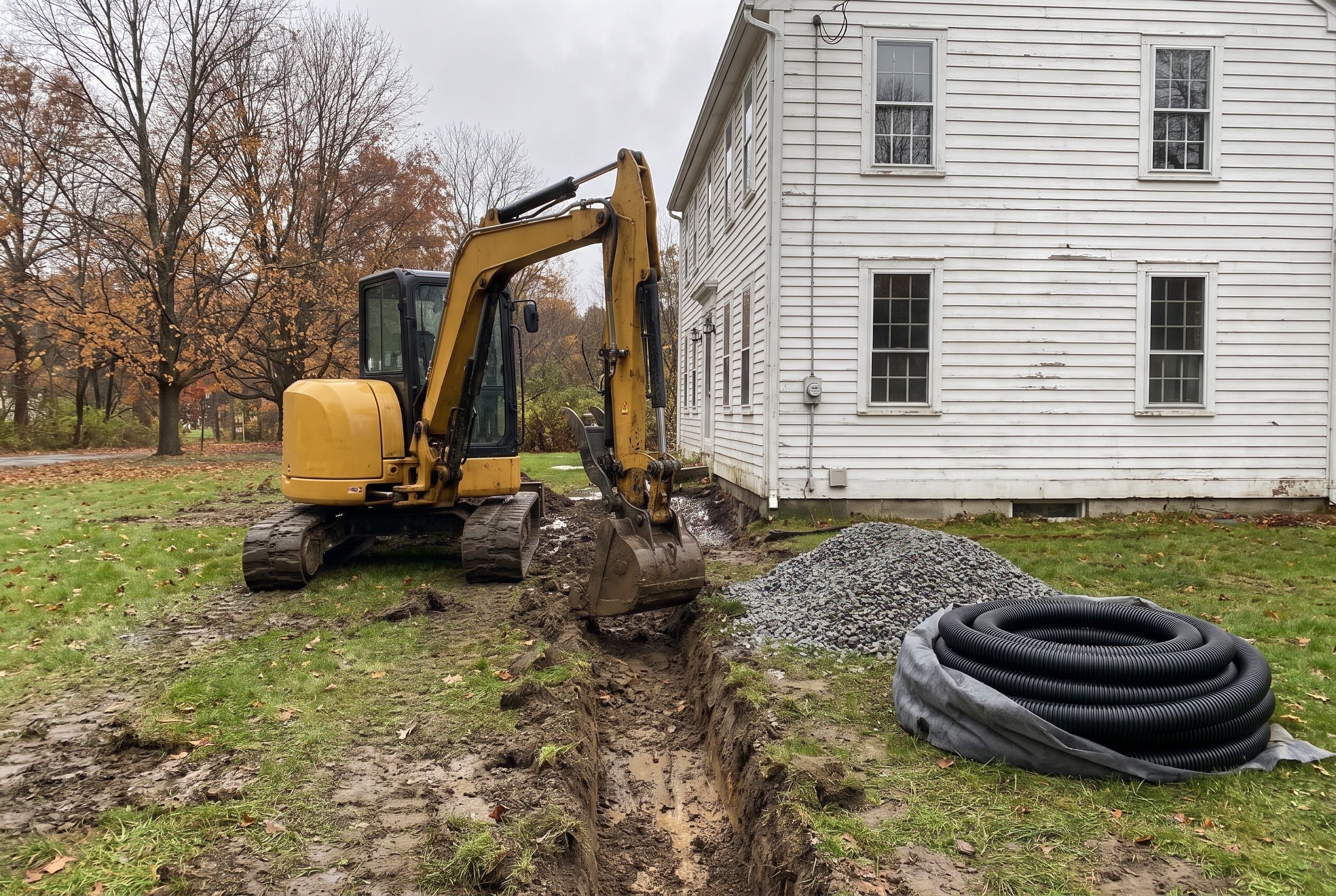
Where the Water Goes
Every French drain has to end somewhere lower than where it starts, so the outlet is the first thing we look at on your lot.
The water can't go onto a neighbor's land or into a septic system. If there's nowhere lower to send it, a French drain won't work, and we'll talk with you about other ways to deal with the water.
- Daylight: the pipe comes out on a lower part of your property, with stone or a pop-up emitter at the end.
- A dry well: a buried chamber or stone pit that lets the water soak into the ground. We put those in too.
- A storm drain or catch basin, where the town allows it. It's best to check with your town first, and we can tell you what towns usually want to see.
French Drain Cost and Time on Site
The price depends on more than the length of the drain. Rock in the ground and how easily a machine can reach the spot make a big difference too.
Most residential French drains take a day or two on site, though a long run, a dry well or a lot of ledge can add time.
For a price, send a few photos of where the water sits and a rough idea of how long the drain needs to be.
- Length and depth: more trench means more digging, stone and pipe.
- Ledge and rock: Connecticut ground is full of it, and hitting ledge slows the dig.
- Soil: wet clay is slow, heavy digging. Sandy ground goes faster.
- Access: gate width, fences, slopes and trees decide which machine fits.
- The outlet: running to daylight costs less than a dry well or a storm drain tie-in.
- Spoil: the dirt that comes out is spread on site or hauled away.
- Putting the yard back: topsoil, seed or sod.
A short, shallow run in soft soil, with an obvious low spot to drain to, is a reasonable weekend project. It gets harder when the drain is long or deep, close to the house, or has to go through rock or roots. If a homemade drain isn't working, the slope of the pipe and the outlet are the first things to check.
For a wet lawn, it's usually 18 to 24 inches deep. A drain meant to catch groundwater before it reaches a foundation goes deeper, so we decide the depth once we've seen where the water is moving.
It can clog over time if fine soil gets into the stone, which is why the fabric and washed stone matter. Tree roots can find their way in too. It also needs somewhere lower to send the water, and it won't fix a yard that's graded toward the house.
Depending on the problem, you could regrade the yard so it slopes away from the house, extend the downspouts, or put in a dry well. If the water is groundwater coming off a slope, a curtain drain is often the better choice.
Landscaping crews, waterproofing companies and excavation contractors all put them in. We install French drains outside, in yards and as footing drains along the outside of a foundation, using our own excavators. We don't install drains inside the basement.
Tell Us Where the Water Sits
Send a few photos and a little about the problem, and we'll get back to you by email. You can also call (860) 883-6201.