
 Serving Hartford & Middlesex County, CT

Drainage Contractor for Wet Yards in Hartford & Middlesex County
Drainage contractor for homeowners in Hartford and Middlesex County. We start by finding where the water is coming from, then dig the fix with our own excavators.
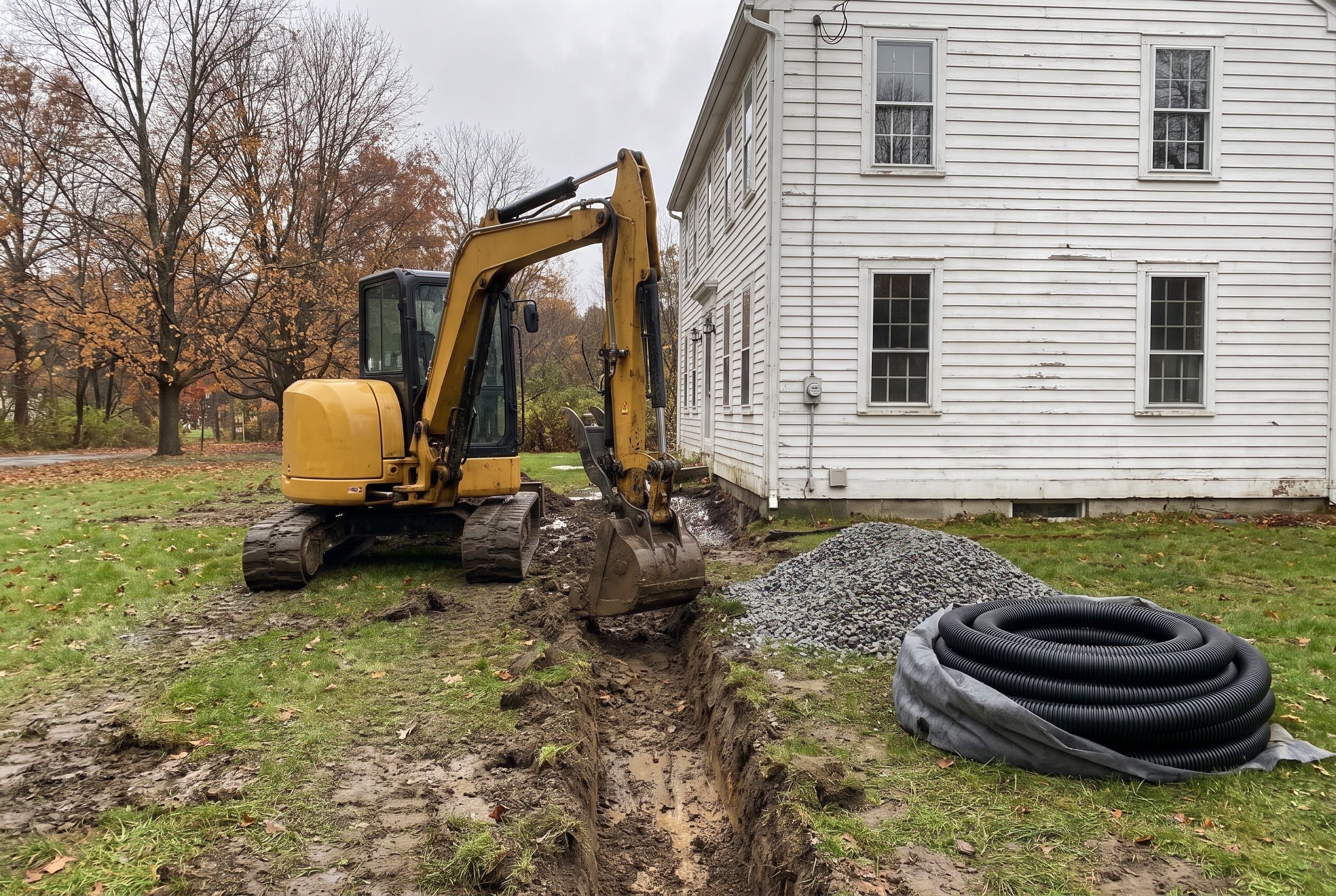
Three Kinds of Wet Yard
Most wet yards fall into one of these three groups, and each one has a different fix.
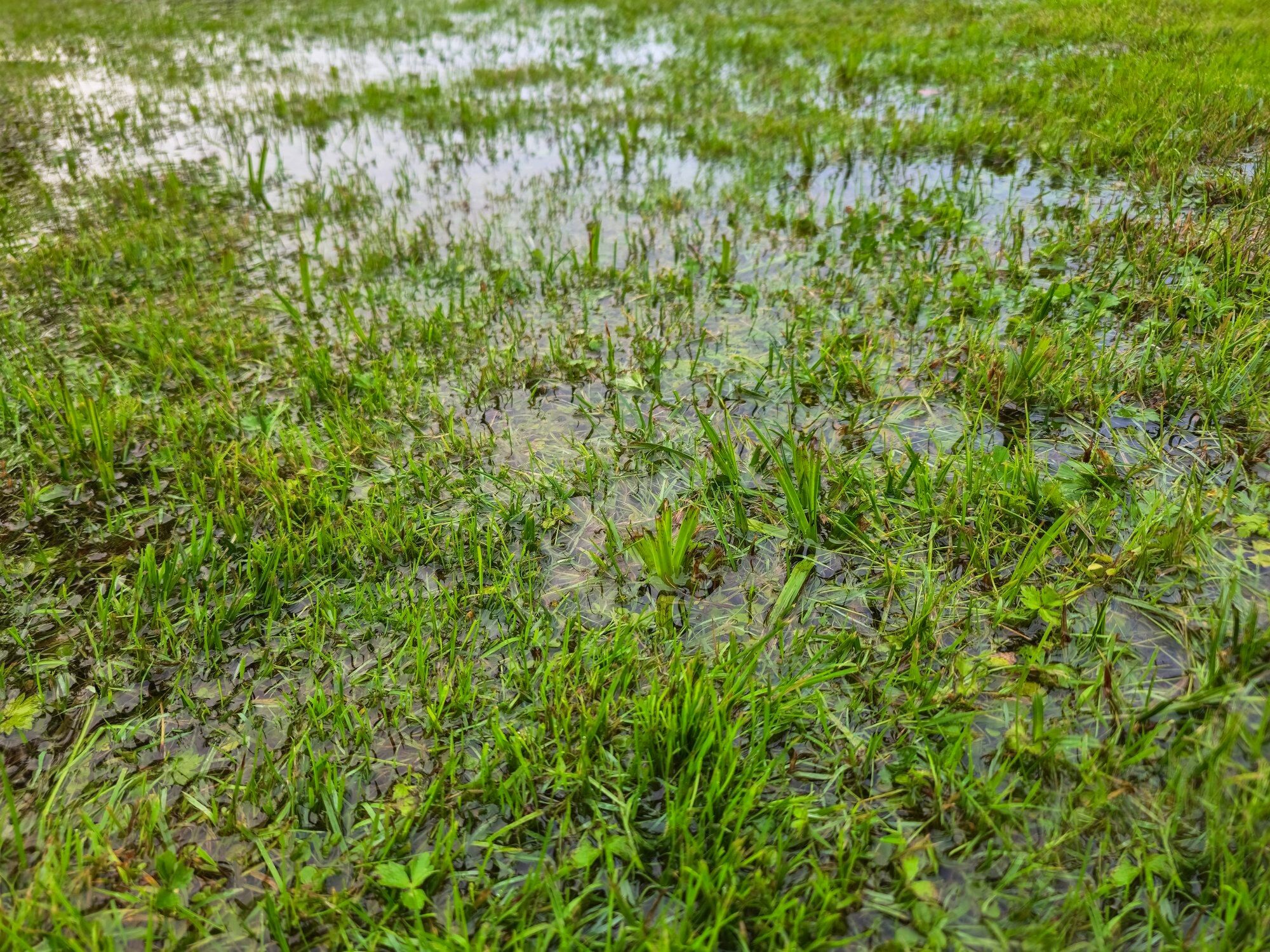
Water sits in the yard for days after it rains
You get puddles in the same low spot every time, and the grass there goes thin or turns to mud. Either the ground dips and holds water, or the soil is heavy clay that won't let it soak in. A shallow dip can often be regraded. Water that pools on clay usually needs a French drain to collect it and carry it away.
French drain installationWater runs toward the house
Rain comes off the lawn, the driveway or the roof and heads for the foundation instead of away from it. You might see a wet line along the wall, mulch washed out of the beds, or a damp corner in the basement. The ground next to the house should fall away from it. If it doesn't, regrading is the first fix. If the water is coming from uphill, a curtain drain catches it before it gets to the house.
Yard gradingThe lawn stays soggy long after every rain
The yard isn't flooded, it just never dries out. It squishes underfoot for days, and the mower leaves ruts. This is usually groundwater moving downhill through the soil from higher ground, often from a neighbor's yard or a slope behind the house. A curtain drain across the slope intercepts it.
Curtain drain installation- If water is already getting into the basement, we can help from the outside with grading, curtain drains and footing drains along the foundation. We don't do interior waterproofing or sump pumps.
How a Drainage Job Goes
Most yard drains take a day or two on site.
Send photos
You send photos of the problem and tell us when the water shows up. Small jobs can often be priced from photos. For bigger ones, one of us comes out to look.
Find the source and the outlet
We look at where the water comes from and where it can go, and explain which fix we'd use and why.
Get the lines marked
We file a Call Before You Dig (811) request so the buried utility lines are marked before we dig.
Dig the fix
We dig the trench or regrade with our own excavator, lay stone, fabric and pipe, and backfill.
Put the yard back
We backfill and leave the ground at rough grade. If you'd like topsoil and seed, we can add them.
French Drain, Curtain Drain or Regrading
All three move water away from where you don't want it, but they work in different ways, and some yards need two of them.
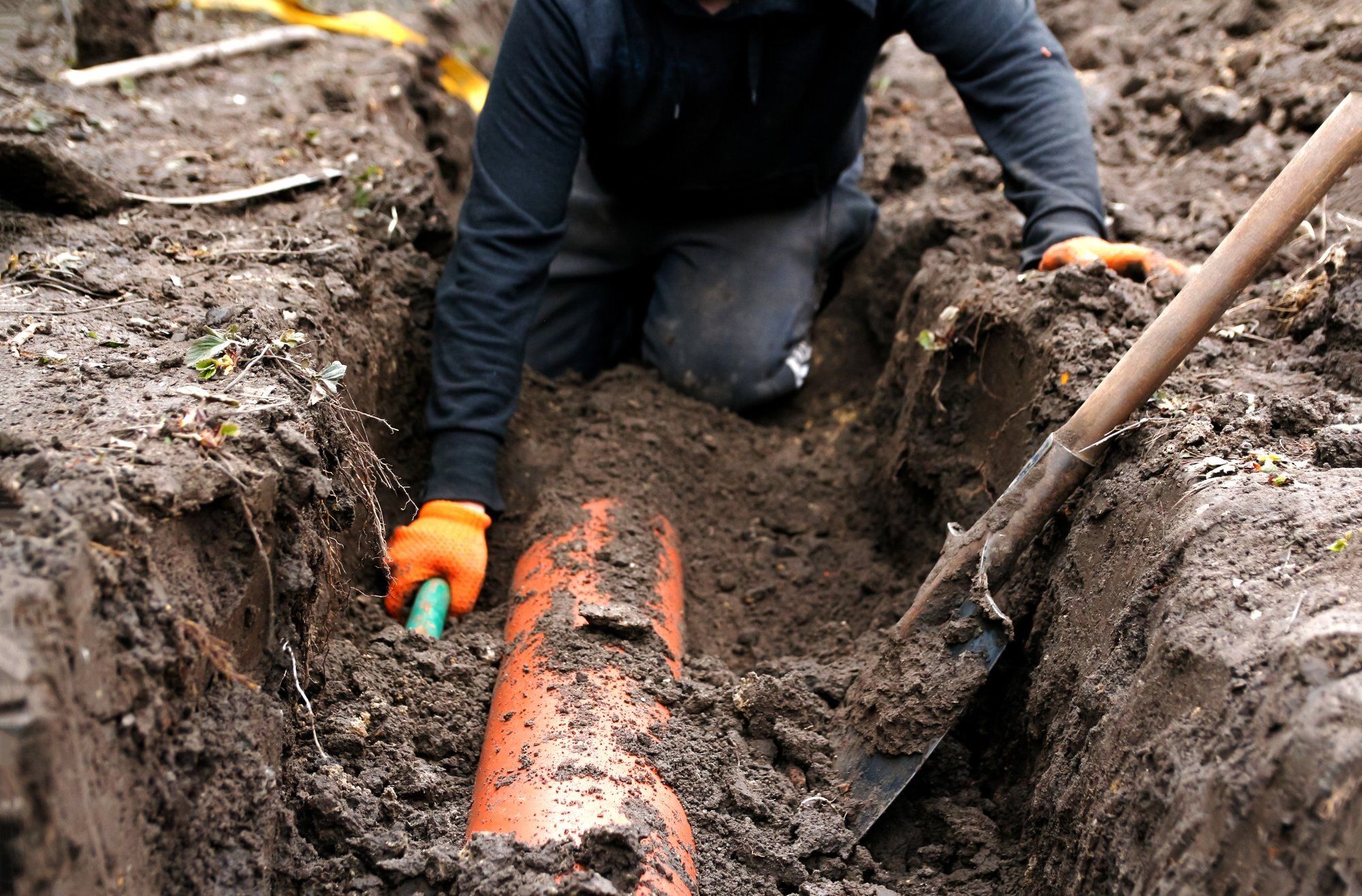
A French drain is a trench with a perforated pipe in a bed of stone, wrapped in filter fabric so soil doesn't clog it. Water soaks into the stone, gets into the pipe and runs downhill to an outlet. It suits a wet area, like a low spot that holds water or a strip of yard that stays wet.
A curtain drain is built the same way as a French drain but goes in a different place. It runs across the slope, uphill of the area you want dry, and catches groundwater before it reaches your lawn or your house. If the water is coming from the hill behind you or the neighbor's yard, a curtain drain is usually the one to use, since a French drain down in the wet spot would only catch the water that's already there.
Regrading means reshaping the ground so water runs off where you want it. Around a house, that means soil sloping away from the foundation on every side. It helps with surface water, meaning rain and runoff that flows the wrong way, but it won't help with groundwater, which moves under the surface. Regrading is also part of our excavation work.
French Drain Installation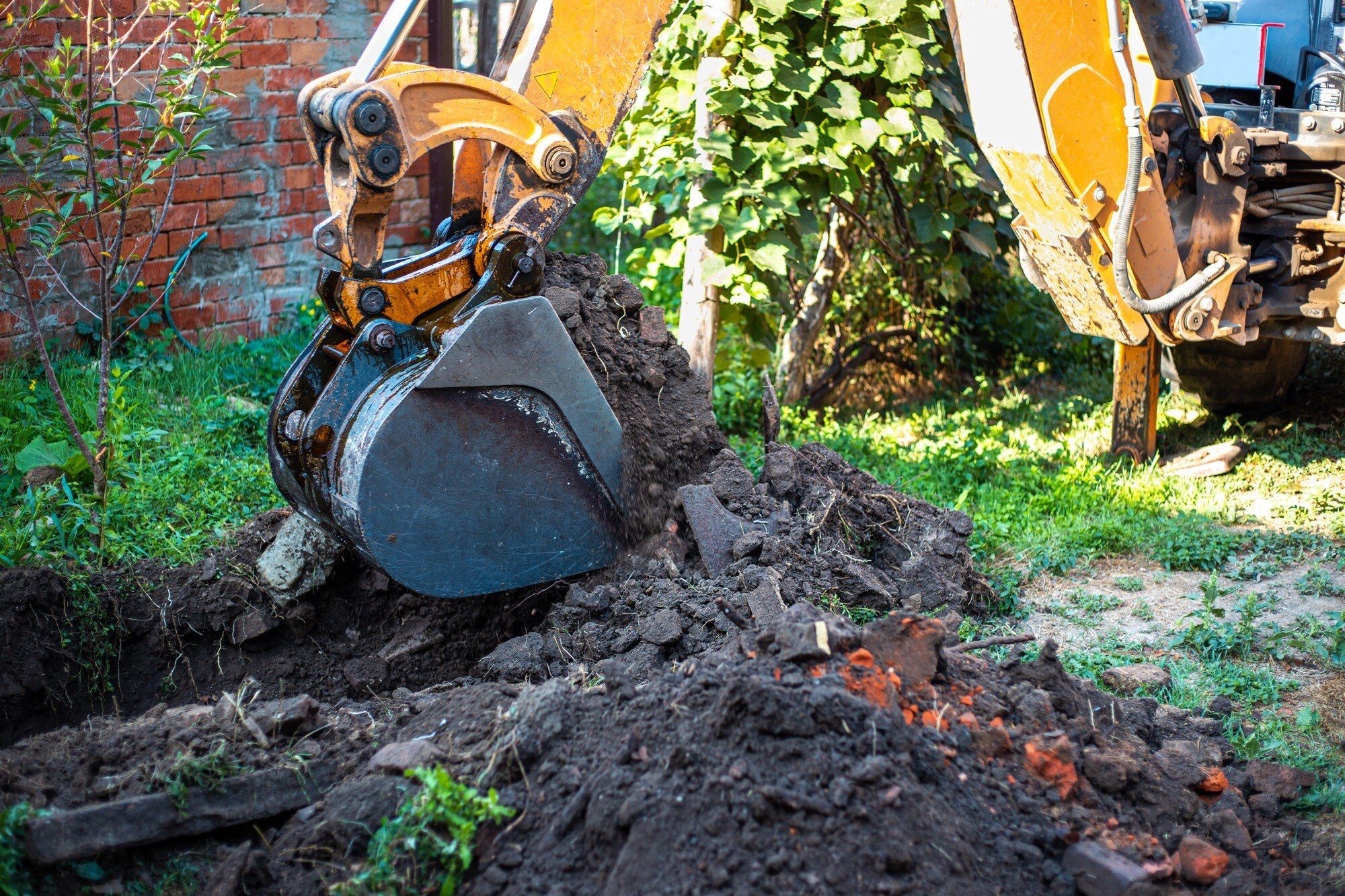
Where the Water Goes
The pipe has to run downhill the whole way to somewhere the water can leave: a lower part of your property, a ditch, or a storm drain where the town allows it. It can't be run onto a neighbor's yard.
Where there's nowhere lower to send it, a dry well can hold the water underground and let it soak in slowly.
We settle on the outlet before any trench is dug.
Tying into a storm drain or a town ditch usually needs the town's OK first. The homeowner usually asks the town, and we're glad to help with the details it wants.
Ask About Your Yard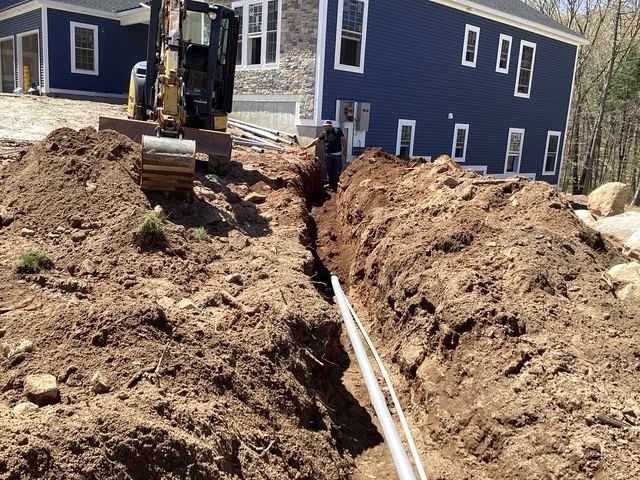
Drainage Cost
We price each drainage job on its own, based on the things below.
If you send photos of the wet area, we can start from there.
- Length: how many feet of drain it takes to reach the water and then the outlet.
- Depth: a curtain drain catching groundwater runs deeper than a shallow surface drain.
- Soil and ledge: clay digs slowly, and ledge or big rock, which is common around here, can mean a different route or a lot more machine time.
- Access: whether an excavator can reach the work, and what's in the way, such as fences, patios, trees or buried lines.
- The outlet: a short run to a ditch costs less than a long run across the property.
- Haul-off: extra soil from the trench has to go somewhere, so some is spread on site and some gets trucked away.
- Lawn repair: how much of the yard has to be put back afterward.
Why Hire an Excavation Company for Drainage
Most drainage work comes down to a trench in the right place, at the right depth, with a steady fall to a good outlet, and that's the kind of digging an excavator does well. We own our excavators and heavy equipment, so we don't have to wait on a rental yard before starting your job.
We're second- and third-generation builders, with 40 years in general contracting and development.
We don't take on septic systems, driveways, slab prep or large commercial jobs.
See All ServicesIt depends on where the water comes from. If it collects in one spot, a French drain in that spot carries it away. If it comes from higher ground and soaks through your yard, a curtain drain uphill catches it first. If you send photos of where the water sits and where it seems to come from, we can help you work out which one you need.
There will be a trench while we work, and the excavator leaves tracks. When we're done, we backfill and leave it at rough grade, and we can add topsoil and seed if you'd like. New grass usually fills in over a few weeks of the growing season.
We can help from the outside, by fixing grading that sends water toward the house, catching groundwater coming downhill, and putting in footing drains along the outside of the foundation. That often stops the water before it reaches the basement. We don't do interior waterproofing.
It depends on how long the drain is, how deep it goes, the soil and rock, how easily a machine can get in, and where the water can go. Because all of that changes from yard to yard, we price each job separately. Send a few photos and we'll give you a number for yours.
We work in Hartford County and Middlesex County, Connecticut. If you're not sure your town is in that area, put it in the estimate form and we'll let you know.
That depends on the season and how busy we are at the time. When we send you the price, we'll include a likely start date.
Tell Us Where the Water Sits
Send a few photos of the wet area and tell us what you've noticed, and we'll get back to you about how we'd fix it. You can also call (860) 883-6201.