
 Serving Hartford & Middlesex County, CT

Curtain Drain Installation in Hartford & Middlesex County
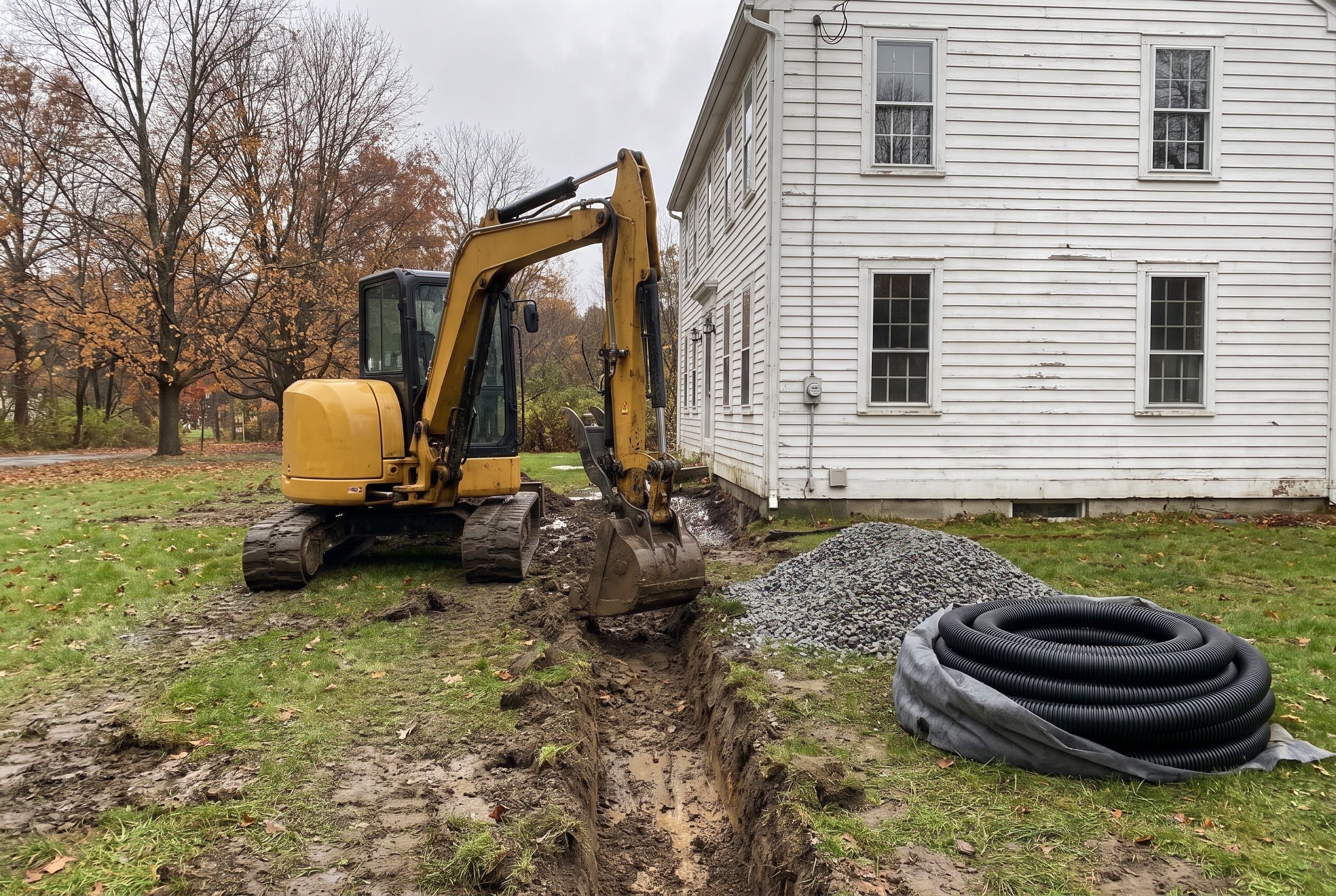
Curtain drain installation for houses that sit below a slope, where water comes down through the ground every time it rains. We dig the drain across the hill above the house with our own excavators, and it carries the water off to the side.
What a Curtain Drain Does
A curtain drain is a trench across the slope, uphill of the house or the yard you want dry. It's lined with filter fabric and filled with washed stone around a perforated pipe. Groundwater moving downhill through the soil runs into the trench, drops into the pipe, and is carried off to the side instead of on toward the house.
Water coming from uphill
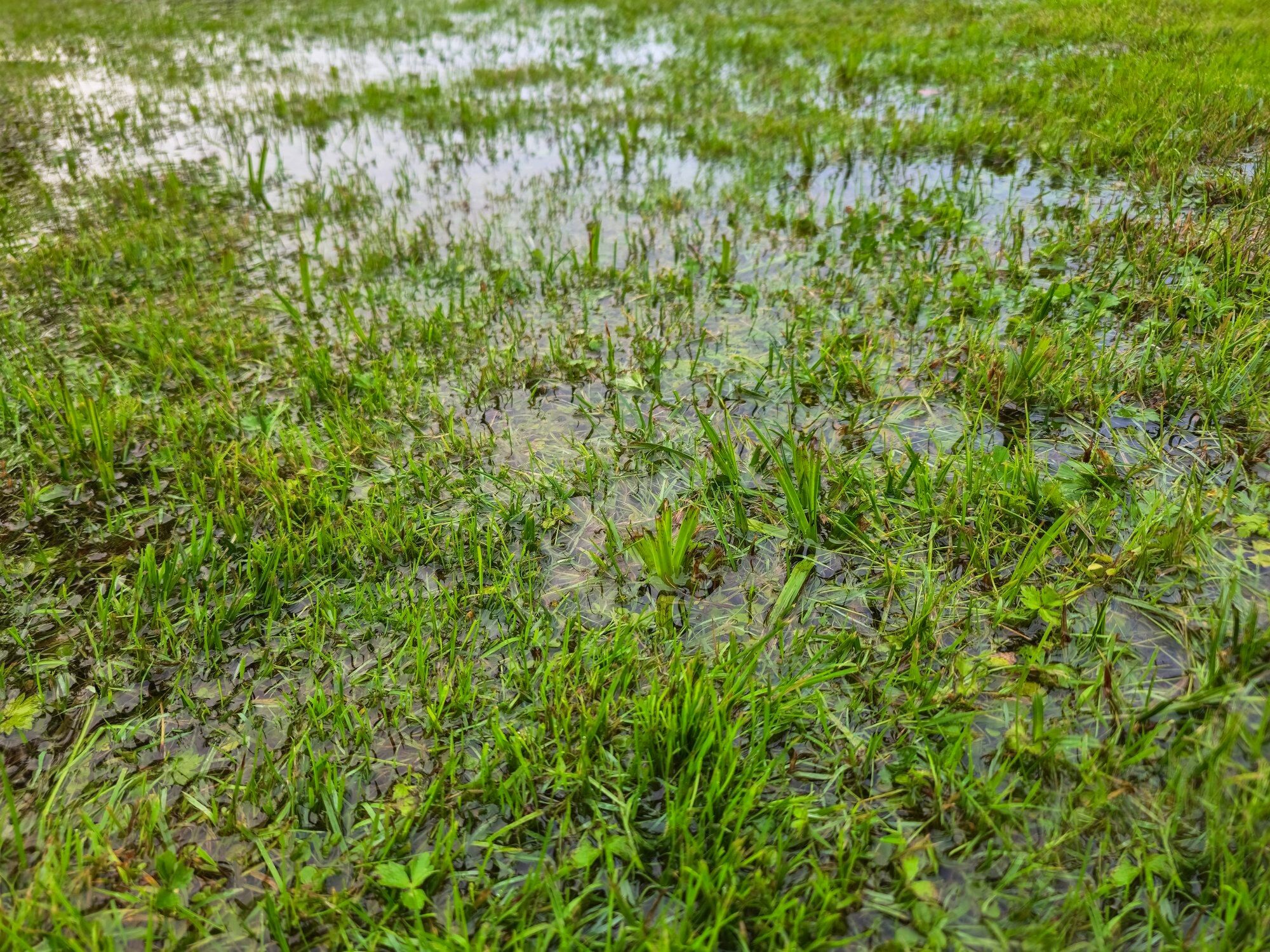
The yard on the high side stays soggy long after the rain stops. Water seeps out of the bank behind the house, or the basement wall that faces the hill is the one that gets wet.
Water sitting in one low spot
If water sits in one low corner and doesn't seem to come from anywhere, a French drain in that spot is usually the better fit.
French drain installationRain running across the lawn
Runoff that flows over the lawn toward the house is usually a grading problem, and reshaping the ground often fixes it without a drain.
Yard grading- It helps to send photos of where the water shows up and which way the ground slopes.
How We Install a Curtain Drain
Most curtain drains take a day or two on site. A long run across a wide slope, or a lot of ledge, can take longer.
Find the line and the outlet
We walk the slope to see where the water comes from, then pick the route across it and a lower spot to send the water.
Get the lines marked
We file a Call Before You Dig (811) request so buried utilities are marked before the machine starts.
Dig across the slope
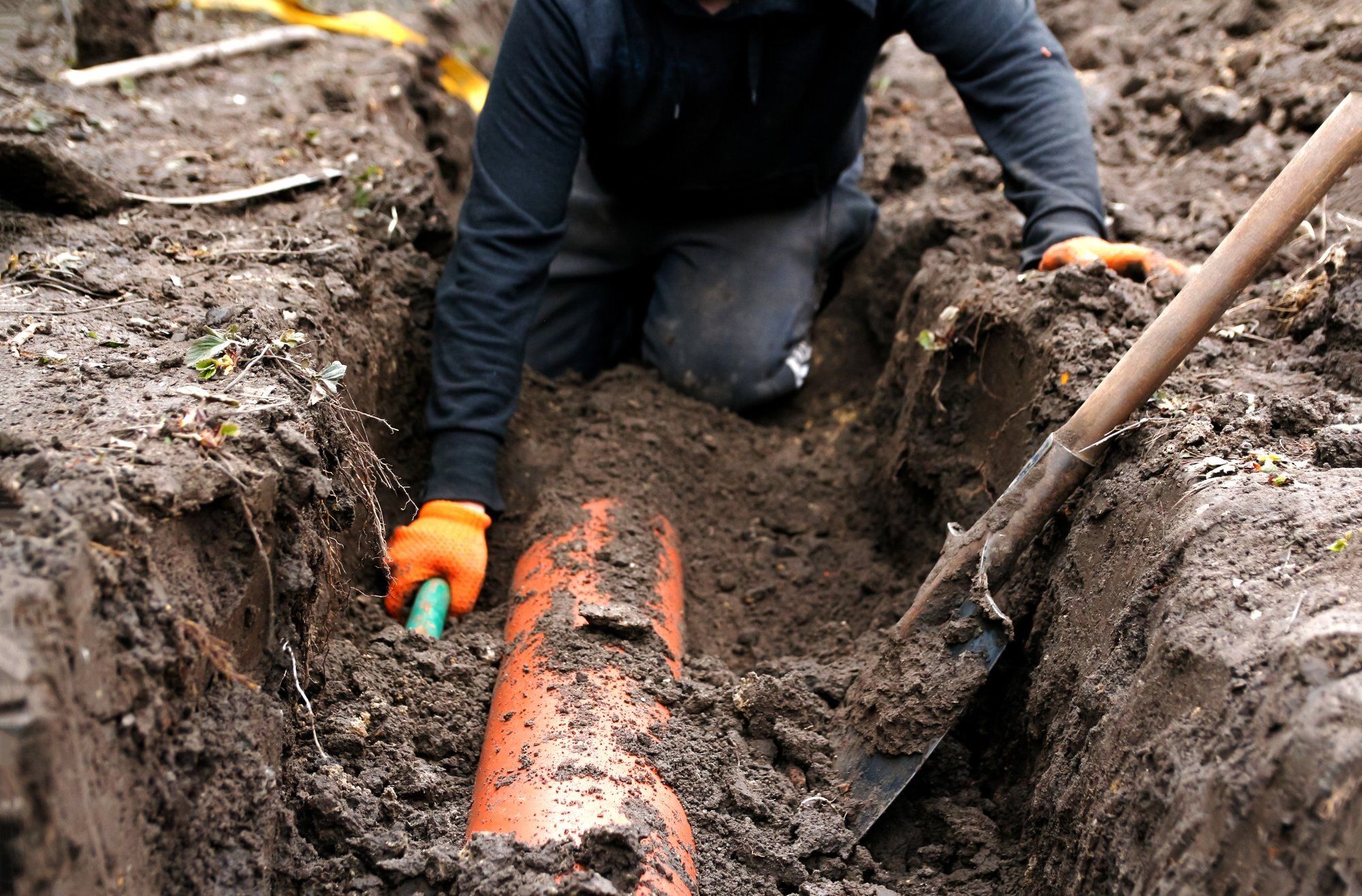
The trench goes deep enough to reach the water moving through the soil, below the wet surface.
Fabric, stone and pipe
We lay filter fabric, washed stone and perforated pipe, with a steady fall toward the outlet.
Cover and finish
Stone and fabric go over the pipe, and then we backfill the trench.

How to Tell Which One You Need
The two are built the same way and differ only in where they go. A French drain sits in the wet spot and drains it, while a curtain drain sits above the wet spot and stops the water before it arrives.
A few things point to a curtain drain:
If a few of these sound like your yard, send us photos of the slope and the wet area together and we'll take a look.
- The house sits below a hill, a neighbor's yard or a wooded slope.
- The ground stays wet for days after rain, even when nothing is pooling on top.
- Water seeps out of the bank or the face of a slope.
- The wet side of the basement is the side that faces uphill.
- Moss, soft ground or ruts show up in a band across the yard rather than in one low spot.
The Outlet, and Who to Check With
A curtain drain carries water sideways and downhill, so it has to end somewhere lower than where it starts. Usually that's a lower part of your own property, with the pipe coming out to daylight. It can't be pointed at a neighbor's yard.
If the outlet would go to a street, a storm drain, or near a stream or wetland, the town may want a say, so it's worth asking your town hall before the job is booked. The homeowner usually handles that, and we're glad to help with what the town wants to know.
Before any trench is dug, buried utility lines need to be marked through Call Before You Dig (811). We file that request ourselves before every job.
Ask About Your Yard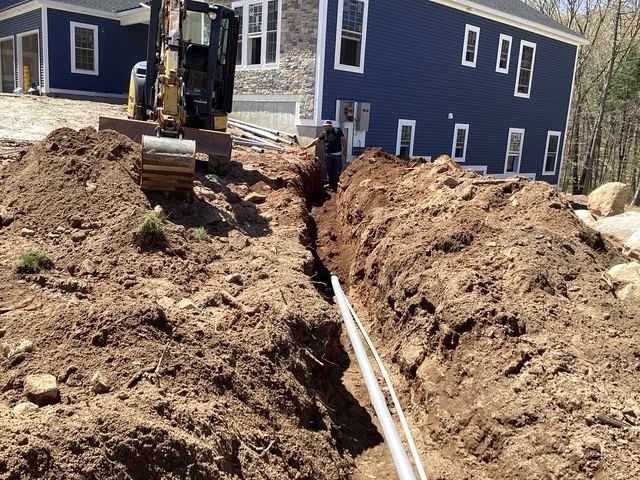
Curtain Drain Cost
A curtain drain is often longer and deeper than a yard drain, because it has to cut across the whole slope.
Send a few photos and a rough idea of how wide the slope is.
- Length: how far the trench has to run to cover the slope, then reach the outlet.
- Depth: how far down the water is moving.
- Ledge and rock: common in Connecticut ground, and slow to dig through.
- Soil: wet clay is heavy digging. Sandy ground goes faster.
- Access: whether a machine can get up the slope, and what's in the way.
- The outlet: a short run to daylight costs less than a long one.
- Spoil and lawn repair: where the extra soil goes, and how much of the yard has to be put back.
They're built the same way: a trench with fabric, stone and perforated pipe. A French drain goes in the wet area and drains it. A curtain drain goes uphill of the wet area, across the slope, and catches groundwater before it gets there.
Deep enough to reach the water moving through the soil. That's usually deeper than a drain for a soggy lawn, and it depends on the slope and the ground, so we decide the exact depth on site.
Across the slope, between the high ground and the house or yard you want dry. It runs with a steady fall to one side, to an outlet lower on the property.
If the water reaching the basement is groundwater coming downhill, a curtain drain can take a lot of it away before it gets to the wall. It won't fix water coming off the roof or a yard that slopes toward the house. All of our work is outside, so we don't do interior waterproofing.
Not much if they're built with non-woven fabric and washed stone. Keep the outlet clear of leaves and soil, and it's worth checking that water comes out of it after a heavy rain.
Tell Us Where the Water Comes From
Send a few photos of the slope and the wet spot, and we'll get back to you by email. You can also call (860) 883-6201.